Energy / Explainer
Why Most Mushroom Coffees Are Too Weak To Work

14 August 2026
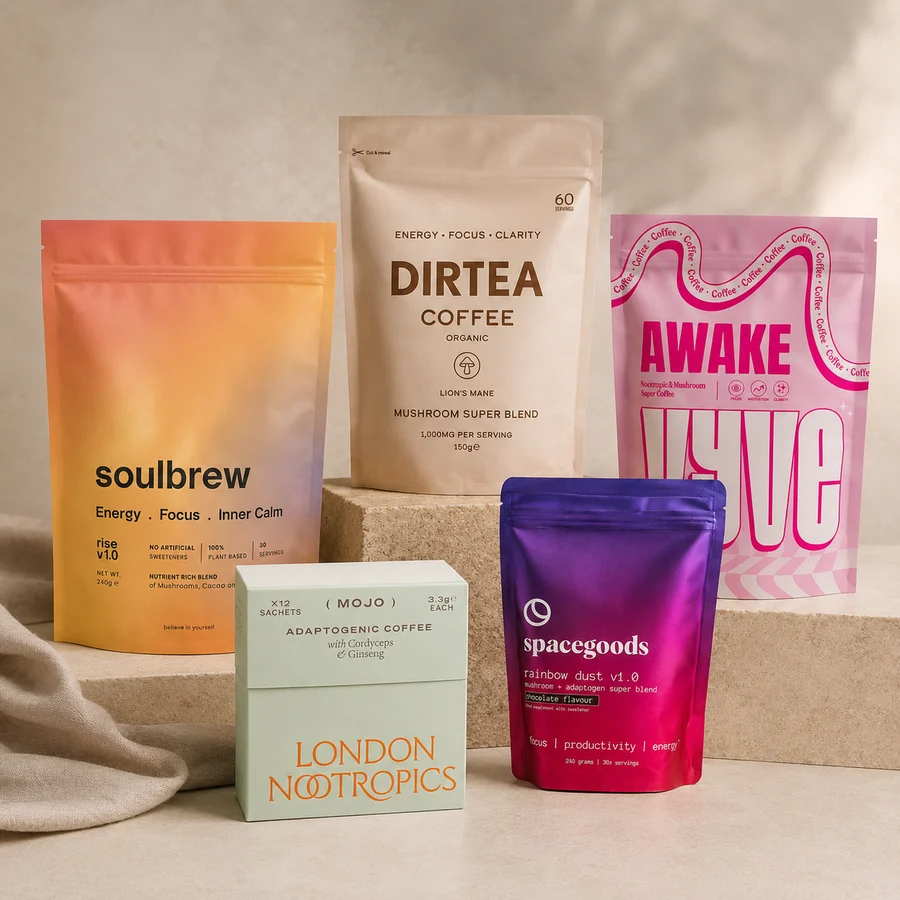
Here's the quiet problem with the mushroom coffee boom: most of the products are technically honest and practically empty.
The ingredients on the front of the pack are real. The Lion's Mane is really in there. The issue is how much. An ingredient at a fraction of its studied dose doesn't give you a smaller effect. It mostly gives you no effect.
The dose is the product
Every ingredient with research behind it has a dose the research used. Studies on Lion's Mane and thinking used about 1000mg a day. Citicoline studies on focus used 500 to 600mg. L-theanine studies used about 200mg alongside caffeine.
Below those amounts, you're mostly buying flavour. Ingredients don't scale down gracefully. There's a level where they work, and under it is just colour in your drink.
Why brands do it
Real doses cost real money. A full gram of Lion's Mane in every cup, thirty cups a pouch, is a lot of an expensive extract. A tenth of that costs a tenth as much. And the front of the pack looks exactly the same.
Brands bet you'll judge the pack, not the label. It usually works, which is why the practice survives.
The 30-second check
- Every ingredient has its own number. No "blends" with one total.
- The numbers are plain milligrams you can compare, not "4:1 extract".
- The main ingredients match the study doses.
Fail any step, and you've learned what you needed to. This works on any brand, in any shop, in under a minute.
The blend trick. "Focus Blend — 900mg" sounds strong. But a blend only has to show the total, not the split. That 900mg can be mostly cheap filler with a pinch of everything you actually wanted. A brand with nothing to hide prints every dose on its own.
This article is general information, not medical advice. If symptoms are severe, persistent, or worrying you, speak to your GP or a pharmacist.