Gut Health / Explainer
12 Foods Your Gut Actually Likes

19 August 2026
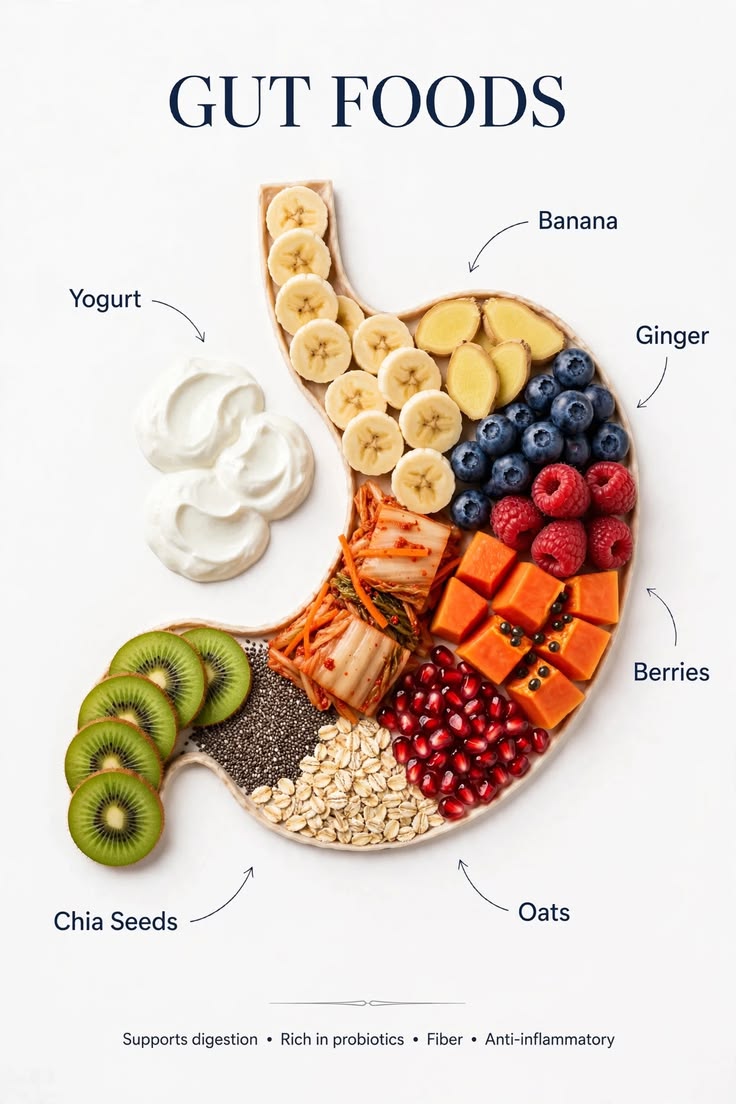
Gut health marketing wants you in the supplement aisle. Your gut mostly wants you in the fruit and veg aisle.
The evidence on gut-friendly eating is surprisingly consistent: fibre feeds your good bacteria, fermented foods add to them, and variety keeps the whole community healthy. Here are twelve foods that earn their place, and what each one brings.
The fermented ones
1. Live yoghurt. The original probiotic food. Look for "live cultures" on the label; plain is better than the sugary flavoured ones, which undo half the point.
2. Kefir. Like yoghurt with a bigger crowd — typically more strains of bacteria. Drink it, or use it where you'd use milk.
3. Kimchi and sauerkraut. Fermented cabbage, live bacteria plus fibre in one. Buy the refrigerated kind; jars on the ambient shelf have usually been pasteurised, which kills the cultures.
The fibre heavyweights
4. Oats. Rich in beta-glucan, a fibre your gut bacteria particularly like, with decent evidence on cholesterol too.
5. Chia seeds. Small, absurdly high in fibre, effortless to add to yoghurt or porridge. Start with a spoonful — going from zero to lots of fibre overnight is where bloating comes from.
6. Beans and lentils. The most under-rated food in Britain. Fibre, protein and prebiotics at pennies per portion. If they bloat you, start small and keep going; your gut adapts.
The prebiotic plants
7. Bananas. Especially slightly under-ripe ones, which carry resistant starch — a type your bacteria ferment happily.
8. Kiwi. Two a day has genuine trial evidence for regularity. One of the few "eat this specific fruit" claims that holds up.
9. Berries. Fibre plus polyphenols, which your gut bacteria turn into useful compounds. Frozen counts and costs half as much.
10. Papaya. Contains papain, an enzyme that helps break down protein, and plenty of fibre besides.
The supporting cast
11. Ginger. Reasonable evidence for easing nausea and helping the stomach empty. Fresh in cooking or steeped in hot water.
12. Inulin-rich veg — onions, garlic, leeks. Inulin is a prebiotic fibre your gut bacteria feed on. It's also why some supplement formulas include inulin as an ingredient: it's one of the better-evidenced gut additions. Food first, though — it's cheaper and comes with dinner attached.
The one-line version: aim for thirty different plants a week — fruit, veg, beans, grains, nuts, herbs all count. Diversity beats any single "superfood", and it beats most supplements too.
This article is general information, not medical advice. If symptoms are severe, persistent, or worrying you, speak to your GP or a pharmacist.