Energy / Explainer
Why Your Energy Dips Through The Day (And What Sets The Pattern)

23 July 2026
Energy isn't a tank that drains through the day. It's a wave — and once you know its shape, the dips stop being mysterious.
The natural curve
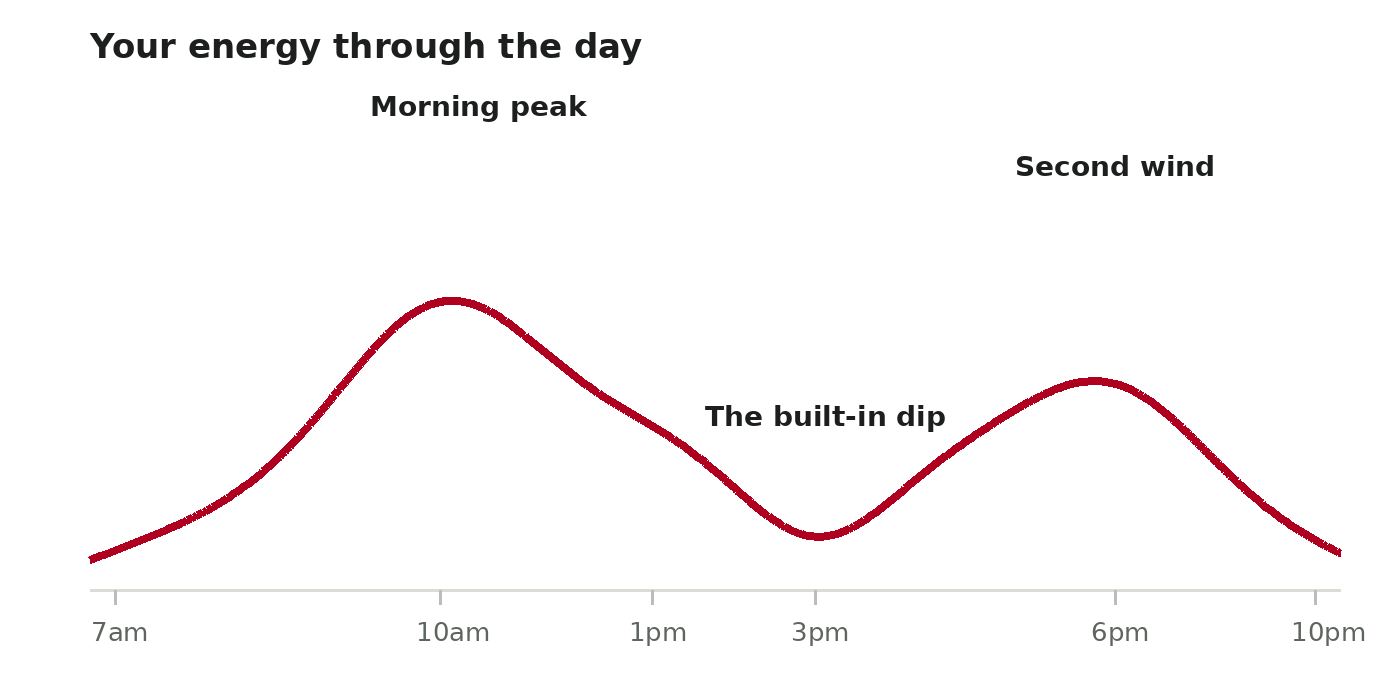
Your body runs on a roughly 24-hour rhythm. For most people that means grogginess for 20 to 60 minutes after waking (sleep inertia — normal, not a defect), a peak of alertness mid-morning, a genuine biological dip in the early afternoon, a second good stretch in the late afternoon or evening, and wind-down after dark. The 3pm slump exists in cultures with and without heavy lunches. It's built in.
What makes the dips deeper
The curve is natural; the crater is usually self-built. The big four:
- Caffeine timing. A big hit on waking plus a 4pm rescue cup deepens tomorrow's fog — the crash cycle in action.
- Fast-carb meals. A beige lunch amplifies the natural afternoon dip into a wall — protein at lunch flattens it.
- Short sleep. Every dip in the curve gets deeper on six hours than on eight. No exception has been found.
- Stillness. Sitting through the dip makes it longer. Ten minutes of walking reliably shortens it.
Working with the wave
Put your hardest thinking in the mid-morning peak. Put admin, walking meetings, or the gym in the early-afternoon trough. Stop caffeine after lunch. If you nap, keep it under 25 minutes and before 3pm. And treat a persistent flat line — no peaks at all, for weeks — as a reason to see your GP and check the basics, which we've covered in Always Tired?.
The goal isn't a flat, permanently energised day. Nobody has one. The goal is a wave you can schedule around instead of fight.
This article is general information, not medical advice. If symptoms are severe, persistent, or worrying you, speak to your GP or a pharmacist.